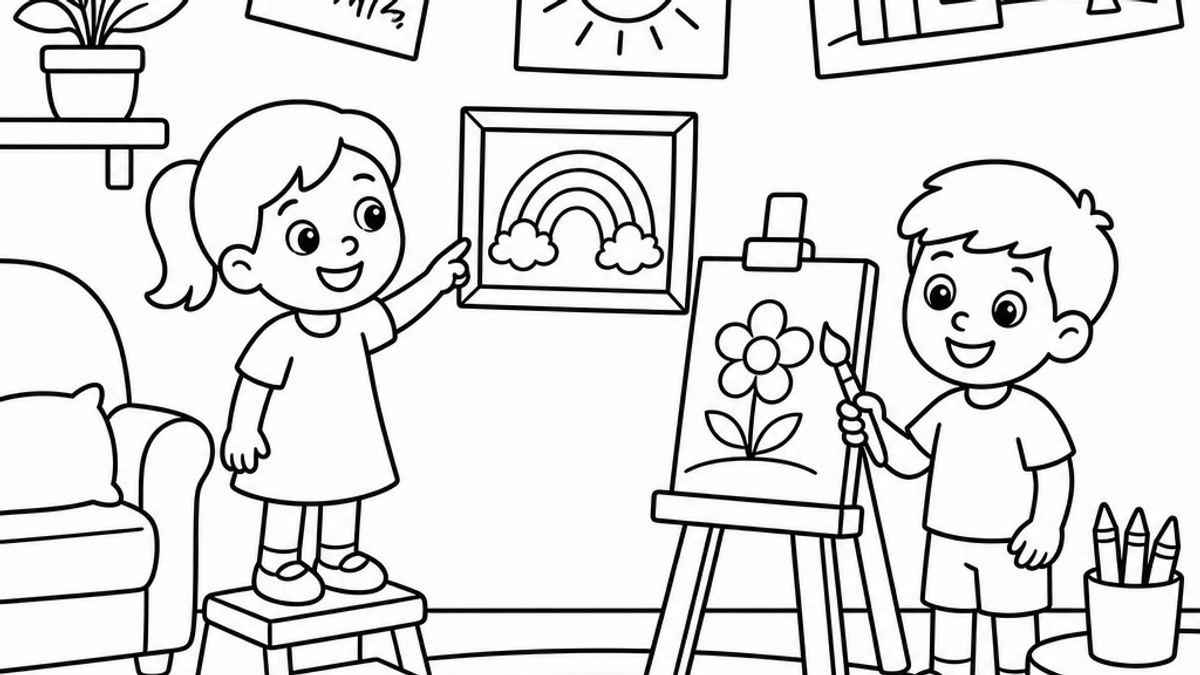
The fridge door is full. The high chair's stack of crayon drawings from 2019 is somehow still in a drawer. And every Tuesday your kid hands you a new one, damp with glue, expecting it to live somewhere important. This is the actual problem. Not "should I display my child's art" (yes), but "where does it go, and what happens to it after."
Here's how to set up a system that celebrates the art without turning your hallway into a collage of everything since preschool.
Creative ways to display children's artwork
Start with the goal: the art gets seen, then it moves along. A display isn't a museum wing. It's more like a rotating exhibit with a very short attention span, because your kid's attention span is also very short.
A few low-effort setups that actually get used:
A clip rail along one wall, low enough for your kid to add their own piece
A magnetic strip mounted at kid height, with a few strong magnets
A cork board cut into a shape (a cloud, a star) instead of a boring rectangle
A clothesline strung across a playroom corner with mini clothespins
A single frame with the glass swapped for cork, so pieces slide in and out without hardware
The common thread: whatever system you pick needs to let kids swap art in without you standing there holding the hammer. A 4-year-old can clip a picture to a string. A 4-year-old cannot, and should not, be handed a staple gun.
DIY kids art display wall
A dedicated wall sounds like a weekend project. It can be an afternoon.
The cheapest version is a clip rail: a thin wood strip (or even a yardstick) mounted horizontally, with spring clips or mini clothespins screwed in every eight inches or so. Pieces hang, overlap, swap out. No new holes for every drawing, just the clips staying put.
For hanging kids art in hallway spaces, go narrow and long instead of a big square grid. Hallways get walked through fast, so a single horizontal line at eye level (yours, not just theirs) reads better than a cluttered block of frames people have to stop and decode.
If you want it to look intentional rather than "we ran out of fridge space," pick one backing color and stick with it. A wall of white paper on pale blue reads like a gallery. A wall of random paper colors reads like a recycling bin exploded. Both are fine. One just photographs better for the grandparents.
Rotating kids art display system
This is the part most families skip, and it's the part that actually matters. A display wall with no rotation is just a wall that slowly fills up and then gets abandoned, which is where "guilt pile in the garage" starts.
A simple rule: new piece goes up, oldest piece comes down. That's it. The down piece goes into a holding spot (a drawer, a folder, a bin) for a week before anyone decides its permanent fate. Giving it a week means you're not deciding in the heat of pickup chaos whether a crayon scribble is a keepsake or recycling.
How often should you actually rotate? Weekly works for most families with one or two artists in the house. If your kid produces three masterpieces a day (some do), you may need a faster cycle, maybe every few days, just so the wall doesn't turn into wallpaper nobody looks at anymore. The exact schedule matters less than having one. Pick a day, tell your kid "Sunday is swap day," and let them help choose what moves.
This is also a nice moment to talk through the piece with them using real art words instead of just "nice job." Ask about the lines, the shapes, whether a color feels warm or cool. The Getty Museum's framework on elements of art breaks these down simply: line, shape, space, color, texture. You don't need to teach a lesson. Just asking "why'd you pick purple for the sky" turns a 30-second glance into a real conversation, and kids notice when the question is specific instead of generic praise.
Frame children's art for display (without spending a fortune)
Framing feels like the "grown-up" way to display art, and it can get expensive fast if you're buying a new frame for every finger painting. A few cheaper paths:
Buy a few standard-size frames (8x10, 11x14) once and swap the art inside, not the frame
Use a single large frame with multiple mat openings for a rotating gallery of small pieces
Clip-style "frameless frames," just glass and spring clips, work for anything from a crayon drawing to a finger painting
Poster strips or removable adhesive hooks let you mount frames without drilling, which matters a lot if you're renting
You genuinely do not need to frame everything, or even most things. Save framing for the pieces your kid is proudest of, the ones they bring to you and say "look" with real feeling in their voice. That's usually a smaller pile than you'd think.
Display kids artwork without frames
Some of the best displays skip frames entirely. A binder clip at the top of a drawing, hung from a nail, costs nothing and looks intentional if you're consistent about it. A washi tape border around the edges of a piece taped straight to the wall reads surprisingly polished, and it comes off without damage.
For renters worried about walls (a completely reasonable worry, we've all stared at a nail hole wondering if the deposit survives), command strips rated for the weight of paper hold up fine for most drawings. Test one in a low-visibility spot first. Painter's tape in a neat grid is another zero-damage option, and it peels off clean even after months.
Kids artwork storage and display: what happens to the art that comes down
Here's the honest answer nobody wants: you don't have to keep everything, and you're allowed to feel weird about that anyway.
A simple system:
A flat under-bed bin or portfolio folder for the "maybe keep" pile
A phone photo of anything that's getting recycled, so the memory survives even if the paper doesn't
A yearly pass where you (not your kid, this part's easier without an audience) pick the ten or so best pieces for a keepsake box
The keepsake box has a lid. When it's full, something has to come out before something new goes in
That last rule is the one that actually prevents the garage pile. A keepsake box isn't a landfill. It's a highlight reel.
Coloring and drawing also happen to be good practice for the small hand movements kids are building at this age, things like holding a pencil, managing scissors, buttoning a coat. The NAEYC's guidance on fine motor skills lists drawing and coloring alongside things like playdough and puzzles as everyday ways kids practice hand strength and coordination. It's not a reason to keep every drawing forever. It's a reason to keep handing them the crayons.
If your kid is currently obsessed with one specific thing (dinosaurs this month, dragons next month, we've seen it all), a fresh page on exactly that topic tends to get more real effort than a random printout. Our dinosaur coloring pages and pages made for 4-year-olds are built with that in mind: big bold lines, room for a kid who's still figuring out how to stay inside them.
Frequently asked questions
How do I display my kids' artwork without ruining the walls?
Stick to removable options: painter's tape, command strips rated for paper weight, or a clip rail mounted with just a few screws instead of one hole per drawing. Test any adhesive in a hidden spot first if you're renting.
What's the best way to store kids' art after displaying it?
A flat bin or portfolio folder works better than a box you have to dig through. Photograph pieces you're letting go of, and keep a single keepsake box with a lid for the best of the best.
How often should I rotate kids' artwork on display?
Weekly is a solid default. Prolific artists might need every few days. The schedule matters less than having a clear one your kid knows about.
How do I frame my child's artwork cheaply?
Buy a few standard frame sizes once and swap the art inside rather than buying new frames each time, or use clip-style frameless frames that work for any paper size.
What do I do with all my kids' old artwork?
Photograph it, pick a small yearly highlight pile for a keepsake box, and let the rest go. A photo preserves the memory without needing a storage unit.
How can I make my kid feel proud of their art?
Display it somewhere visible, even briefly, and talk about specific choices they made ("why'd you make the sky purple") instead of generic praise. Noticing detail tends to land better than "good job."
Should I keep every piece of my child's artwork?
No, and that's fine. Keeping everything usually means nothing gets seen or appreciated on its own. A smaller, rotating, celebrated collection beats a silent pile in a closet.
If you want a fresh page to kick off this week's rotation, our daily picture drops free every morning, no account needed for the first couple of pages, so there's always something new worth clipping to the wall.
The Chunky Crayon Editorial Team
Chunky Crayon editorial
The Chunky Crayon team publishes playful, practical and source-aware ideas for creative family time. Developmental or wellbeing claims are general education, not clinical or educational assessment.