Coloring Pages for After-School Decompression: Calm Kids
Coloring Pages for After-School Decompression
The backpack hits the floor. The shoes come off, maybe thrown, maybe just abandoned mid-stride. And somewhere between the car and the kitchen, your calm, chatty kid turns into someone who cries because the sandwich is cut into triangles instead of squares. Nothing happened. Nothing happened and everything happened, because they spent six hours holding it together for someone else.
That gap between school and home is where a lot of parents lose the afternoon. A stack of coloring pages by the door won't fix the whole thing, but it gives a kid something to do with their hands while the rest of them settles.
Why Kids Need Decompression Time After School
School asks a lot of small nervous systems. Sit still, raise your hand, share the glue stick, transition to math, transition to lunch, transition to recess, transition back. Kids spend the day regulating themselves for teachers, friends, and a bell schedule they didn't choose.
By 3pm, that effort runs out. Home is the one place they don't have to perform anymore, so home is where the performance stops, sometimes loudly. This isn't bad behavior. It's more like a pressure valve finally finding an opening.
Every kid is different here. Some kids decompress by going quiet. Some decompress by narrating their entire day in exhausting detail. Some decompress by falling apart over triangle sandwiches. None of these are wrong, they're just what your particular kid's nervous system does when the school mask comes off.
What Causes After School Meltdowns
What Is Restraint Collapse in Kids After School
A lot of parents have started calling this "restraint collapse," the idea that kids hold their behavior together all day at school and then let it go the second they feel safe, usually on you. It's not an official medical diagnosis, more a shorthand parents and teachers use to describe a pattern they recognize. If your mild-mannered first grader turns into a tornado the second they see your face at pickup, that's probably not a parenting failure. It might just mean you're the safest place they know.
Other common culprits stack on top of that: low blood sugar, built-up sensory input from a noisy classroom, missed bathroom breaks, social friction they haven't processed yet. Overstimulated kids don't always say "I'm overstimulated." They say it with their whole body, usually in the form of a meltdown over something that looks tiny from the outside.
After School Calm Down Activities for Kids
The fix isn't one magic activity. It's giving your kid a low-demand, screen-free way to come down from the day before you ask anything else of them, including "how was school."
A few things that tend to work:
- A snack before conversation. Hungry and overwhelmed look identical in a 6-year-old.
- A few minutes of quiet before questions. "Tell me about your day" can wait ten minutes.
- Something for their hands. Playdough, building blocks, or a coloring page all work because they ask very little of a tired brain.
- Outside time if the weather allows it, even just five minutes in the yard.
The American Academy of Pediatrics suggests building deliberate screen-free zones and times into a family's routine so other activities, like reading, play, and hobbies, don't get crowded out by a device (HealthyChildren.org, AAP). After school is a natural place to put one of those zones. Not because screens are evil, just because a glowing tablet doesn't give a kid much to do with their hands or their attention besides watch.
Coloring Pages to Help Kids Decompress After School
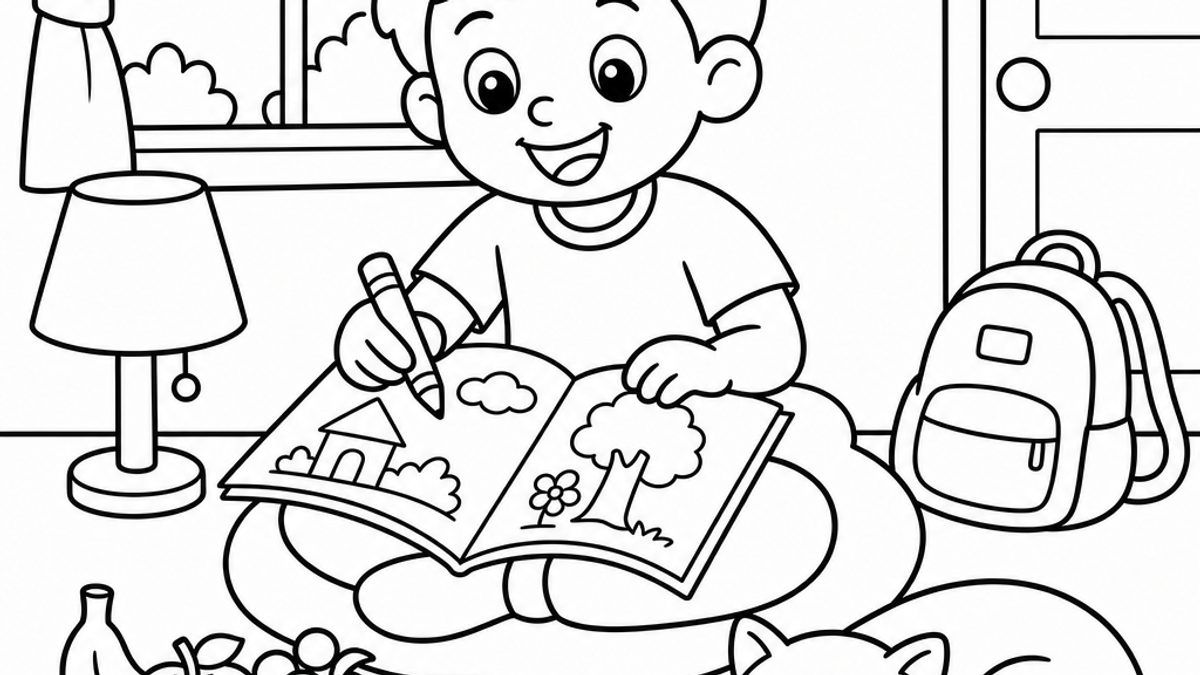
This is where a stack of coloring pages earns its spot by the door. Coloring doesn't ask a kid to talk, perform, or make a decision bigger than "should the dragon be purple or green." That's exactly what a wrung-out brain needs after six hours of bigger decisions.
The hand-work matters too. The National Association for the Education of Young Children lists drawing, scribbling, and coloring with crayons among everyday activities that give kids practice with the small hand and finger movements behind fine motor skills, the same muscles used for writing and buttoning a coat (NAEYC). Nobody's claiming a coloring page builds a skill on its own. It's one more low-pressure chance to practice, alongside the puzzles, playdough, and sandwich-stirring that already fill a kid's week.
There's also something steadying about picking colors on purpose. Artists talk about color in terms of hue, value, and intensity, and about how warm colors read as energetic while cool, muted ones feel calmer (Getty Museum Education). Your 5-year-old isn't thinking about color theory. But watching them choose a soft blue sky over a hot red one is a small, visible sign that their system is slowing down, not speeding up.
If your kid is wound up enough that holding a crayon steady feels like too much, our after-school calming coloring pages for kids with ADHD use bigger shapes and simpler lines so there's less to get frustrated about. And on the days the big feelings show up before the crayons even come out, big-feelings coloring activities give kids pages built around naming and sitting with an emotion instead of just distracting from it.
Post School Routine Ideas and Quiet Time Activities
A routine helps because it removes a decision from an already tired brain. Kids don't have to wonder what happens next if the answer is always the same.
A simple version:
- Snack, no questions yet.
- Ten to twenty minutes of quiet, hands-busy time. Coloring, building, playdough, whatever your kid reaches for.
- Check in about the day, loosely, while they're still coloring if that helps them talk.
- Move into homework, outside time, or whatever's next on the family's actual schedule.
Keep a stack of pages somewhere obvious, the kitchen table, a basket by the door, the back seat of the car. The goal is zero setup. If your kid has to ask for supplies, you've already lost the five calm minutes you were trying to create.
FAQ: After School Decompression, Answered
How long should after school decompression time be?
There's no universal number, and kids vary a lot. Many families find ten to thirty minutes of low-demand time is enough to take the edge off before homework or activities start. Watch your own kid rather than a clock. Some need five quiet minutes, some need the whole afternoon.
Why is my child so cranky after school?
Most often it's some mix of hunger, built-up sensory input, and the effort of holding it together around other people all day. The crankiness isn't aimed at you, even when it lands on you.
How do I help my child transition from school to home?
Keep the first few minutes low-pressure. Skip the interrogation about homework and grades. Offer a snack and something quiet for their hands before asking anything that requires them to think or explain.
How can coloring help kids calm down after school?
It gives kids a screen-free task that's familiar, low-stakes, and doesn't require a right answer. It also keeps their hands busy, which for a lot of kids makes it easier to sit still and let their nervous system catch up with the rest of them. It won't work the same way for every child, and that's fine.
After-school is a short window, but it sets the tone for the whole evening. A few crayons and a quiet corner won't solve everything, but they can take the edge off long enough to get everyone to dinner in one piece. If your kid's current obsession needs its own coloring page, type what they're into and our generator builds a printable one in about two minutes.
The Chunky Crayon Editorial Team
Chunky Crayon editorial
The Chunky Crayon team publishes playful, practical and source-aware ideas for creative family time. Developmental or wellbeing claims are general education, not clinical or educational assessment.