Pixel Art Coloring: Block Techniques for Digital Aesthetic
Pixel Art Coloring Pages for Kids: Bringing the Retro Grid to Paper
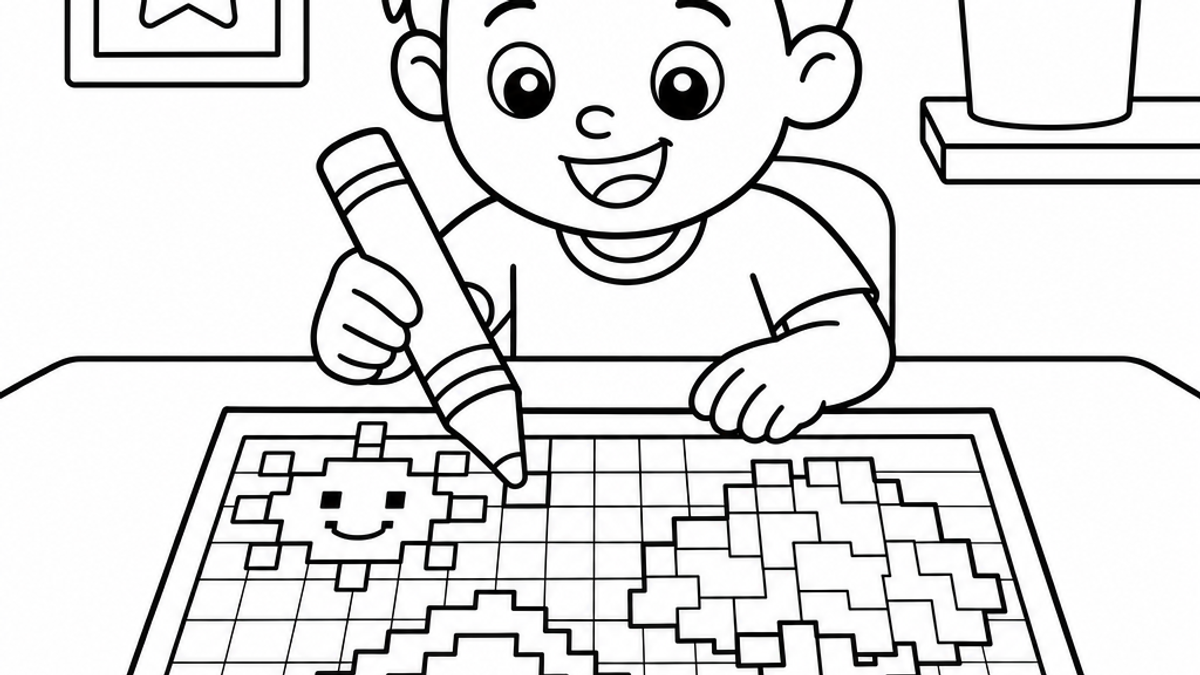
Somewhere between the Lego bin and the tablet charger, there's a kid who loves both blocky video games and coloring pages. Turns out you don't have to choose. Pixel art coloring pages take that chunky, blocky, 8-bit look kids recognize from games and phone icons and turn it into a printable grid they can fill in with crayons, markers, or colored pencils. No screen required.
We kept seeing requests for this from parents whose kids are obsessed with block-style games but need a break from the screen that's showing it to them. So here's the full rundown: what pixel art coloring actually is, how to color the grids without losing your mind, and which version fits which kid.
What Makes Pixel Art Coloring Pages Different
Regular coloring pages have curved lines, shading, little details you can go outside of a bit and nobody notices. Pixel art coloring pages are made of squares. Every square is its own decision. A pixel dinosaur, a pixel spaceship, a pixel heart, it's all built the same way blocky video games are built: one small colored square at a time.
That's the whole appeal, actually. Digital aesthetic coloring pages for kids borrow the visual language of retro video games (think the original Mario, Minecraft, or those little heart and coin icons) and translate it into something you print at home. The result looks satisfyingly retro and feels like a puzzle, not just a coloring page.
Pixel Art Coloring Techniques for Beginners
Grid coloring trips kids up the first time because it looks easy and then suddenly isn't. A few things that actually help:
- Start with the biggest color block first. Backgrounds or large solid areas build confidence before the tricky bits.
- Pick one color, do all of it, then switch. Jumping between colors square by square is how markers dry out and patience runs out.
- Use the grid lines as your guide, not your enemy. Each square gets one color, full stop. No blending required, which is honestly a relief for kids who find shading stressful.
David Park
Parenting Writer
David is a father of three and writes about creative ways to engage children away from screens.