Peace Day Dove Coloring Pages for Global Harmony Kids
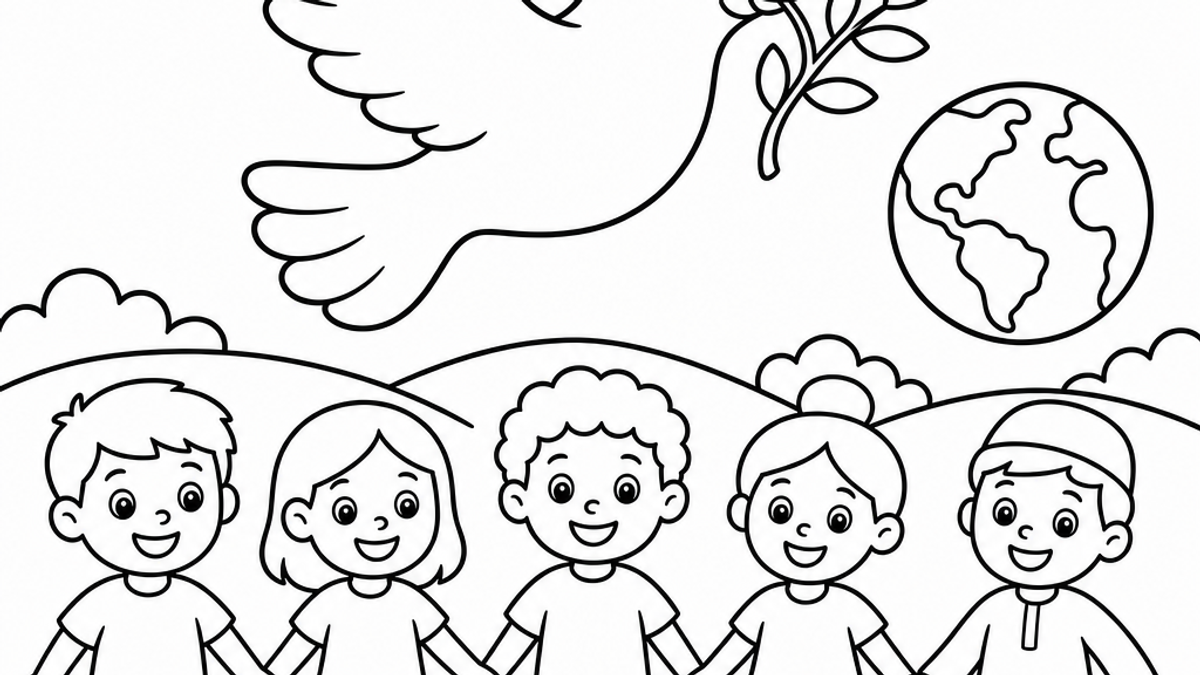
The last week of September always brings the same question into Chunky Crayon's inbox: "Do you have anything for International Day of Peace?" Usually from a teacher planning a Monday morning circle time, sometimes from a parent who just realized September 21 is this Sunday and the school newsletter mentioned a "peace project" due Friday. Either way, a dove coloring page is the fastest honest answer we've got.
What Is International Day of Peace and Why Do We Celebrate It
The United Nations set September 21 aside in 1981 as a day devoted to strengthening the ideals of peace, both between nations and within communities. Schools use it as a hook for lessons on kindness, cultural diversity, and conflict resolution. For families, it's a low-key entry point into a big topic: how do you talk about something as enormous as world peace with a kid who still negotiates bedtime like it's a hostage situation?
Coloring is one honest, screen-free way in. It doesn't replace a real conversation, but it gives a kid something to do with their hands while the conversation happens, which, if you've ever tried to have a meaningful talk with a 5-year-old who is standing still, you know is half the battle.
Peace Dove Coloring Pages for Kids
The dove carrying an olive branch is one of the oldest peace symbols still in everyday use, and it works well for coloring because the shape is simple: round body, curved wings, a small sprig in the beak. Kids as young as 3 can recognize it, and older kids can layer in detail, feather texture, a sunrise background, a globe underneath.
For toddlers and preschoolers, look for pages with:
- A single bold dove outline, minimal background clutter
- Thick lines that forgive wobbly crayon strokes
- Big open wing shapes instead of lots of tiny feathers
- Plenty of white space so the page doesn't feel like a test
Older elementary kids can handle more detail: a dove mid-flight over a landscape, a peace sign made of flowers, kids of different backgrounds holding hands under an olive branch. The Getty Museum's elements-of-art framework is actually useful here, even translated down to a classroom level. Line direction changes the feeling of a drawing: a dove with soft curving wings reads as calm, while sharp diagonal lines in a background suggest motion or tension. You don't need to teach a 7-year-old the word "composition," but you can ask "does this dove look like it's resting or flying fast?" and watch them actually look at the page differently.
If your household or classroom is more bird-obsessed than peace-symbol-obsessed (no judgment, we've met several), our bird coloring pages work as a gentler on-ramp before diving into dove-specific symbolism.
International Day of Peace Activities for Kids
Coloring pairs well with short, concrete activities rather than abstract discussion. A few that actually hold a kid's attention for more than ninety seconds:
- Peace chain: color paper links with words like "kind," "share," "listen" and loop them into a classroom or living room chain.
- Olive branch hunt: find real leaves or twigs outside, glue them onto a colored dove page.
- Peace sign scavenger hunt: spot peace symbols in picture books, on clothing, in the neighborhood.
- Compliment circle: one kid says something kind about the person next to them before coloring starts.
None of these require a worksheet packet or a trip to the craft store. They require about fifteen minutes and a stack of crayons you already own.
Peace Day Educational Activities for the Classroom
Teachers and childminders tend to want structure more than inspiration, so here's a rough 30-minute block that's worked for classrooms we've heard from:
- Opening (5 min): ask kids what "peace" means to them. Write answers on the board without correcting any of them. "No fighting with my brother" is a perfectly good answer from a 6-year-old.
- Coloring (15 min): hand out dove or peace sign pages. Let kids choose their own colors. There's no correct sky color on a peace poster, same way there's no correct sky color on any other poster, something the Getty's color-and-value notes back up when they describe color choice as a tool for mood rather than a rule to follow.
- Discussion (5 min): in pairs, kids describe their page to a partner. This does double duty as a gentle social-emotional learning exercise.
- Share (5 min): a few volunteers hold up pages. Nobody is forced to.
The NAEYC's guidance on fine motor skills lists coloring, drawing, and cutting among everyday opportunities that help kids build hand control, alongside things like buttoning a coat or stirring batter. It's not a claim that coloring builds peace-making skills specifically, just that the hand-eye coordination practice is useful on its own, and a calm coloring block gives you a built-in transition activity before or after a harder lesson.
Global Harmony Coloring Pages Printable
"Global harmony" sounds bigger than a coloring page can deliver, and we're not going to pretend a crayon fixes geopolitics. What a printable page can do is make the idea of different countries and cultures feel approachable to a kid who's still working out that other families eat dinner at different times than theirs does.
Pages that show kids in different traditional dress holding hands around a globe, or flags from multiple countries arranged in a circle, give a visual anchor for conversations about cultural diversity that otherwise stay pretty abstract for a 4-year-old. Pair it with a simple fact ("this flag is from Japan, this one is from Kenya") rather than a lecture on international relations, and let the coloring carry the quiet part of the lesson.
If the global angle doesn't quite land with your group and you'd rather start with something closer to home, our preschooler coloring pages are a good fallback for the same calm, structured feel without the symbolism attached.
Teaching Kids About World Peace Through Art
Art gives kids a way to process an idea before they have the vocabulary to talk about it. A kindergartner who can't explain conflict resolution in words can still draw two kids shaking hands, and that image is doing real cognitive work even if the kid can't narrate it yet.
This is where Chunky Crayon's daily picture habit actually fits the mission. Every day at 8am UTC we publish one new free coloring page, and around late September that rotation leans into doves, peace signs, and kids-of-the-world themes without us needing to say "it's peace week" out loud. Kids who aren't ready to stay inside the lines yet can use the Magic Brush to tap-and-fill a region with a sensible color, so the lesson doesn't stall out over motor skills.
Peace Day Questions Parents and Teachers Ask
How do you explain world peace to a child?
Keep it at the scale a kid actually understands: sharing toys, taking turns, saying sorry. "World peace" clicks later once a child has practiced the small version of it at home or in a classroom.
What is the symbolism of a dove for peace?
The dove-with-olive-branch image traces back to ancient stories of floodwaters receding and new growth returning, and it's been used as a peace symbol in art and political movements for centuries since.
Why is the dove a symbol of peace?
It's partly the olive branch (a sign of a safe return) and partly the bird's gentle, non-aggressive reputation compared to birds of prey. The combination stuck.
How can coloring pages teach kids about peace?
They don't teach the concept on their own, but they give kids a calm, hands-busy activity to do while an adult introduces the idea, which tends to land better than a cold lecture.
What age is appropriate for peace day lessons?
Preschoolers can handle the "be kind, share, take turns" version. Elementary kids can start on cultural diversity and simple conflict resolution. Save geopolitics for much later.
How do I teach my child about conflict resolution?
Model it in small daily disputes (sibling arguments, playground disagreements) rather than saving it for a big annual lesson. Naming feelings out loud ("you're frustrated because he took your turn") is a reasonable starting point.
September 21 isn't a day that needs a big production. A stack of printed dove pages by the door, a few crayons, and fifteen minutes of actual quiet conversation does more than a themed unit most years. If your group wants a page built around whatever they're learning this week, flags, handshakes, a specific country's symbols, our generator turns that into a printable page in about two minutes.
The Chunky Crayon Editorial Team
Chunky Crayon editorial
The Chunky Crayon team publishes playful, practical and source-aware ideas for creative family time. Developmental or wellbeing claims are general education, not clinical or educational assessment.