Earth Day Cleanup Coloring Pages for Environmental Action
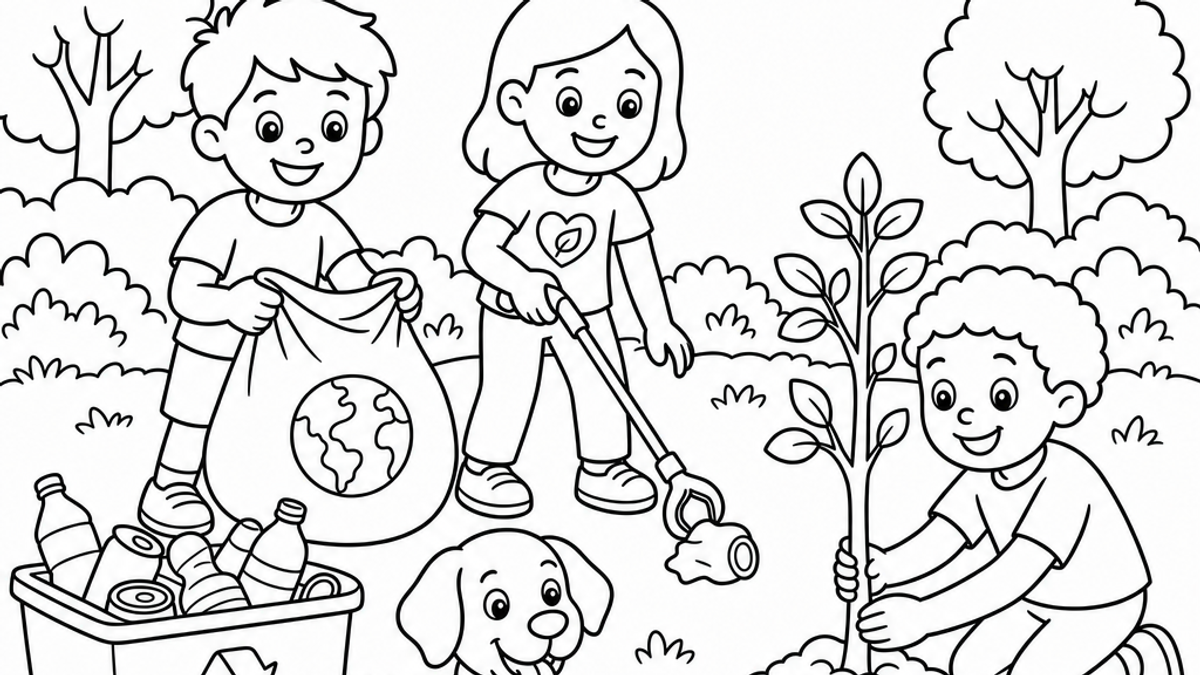
Earth Day Community Cleanup Coloring for Environmental Action
A kid spots a bottle cap on the sidewalk, picks it up, and holds it out like she just found treasure. That's basically the whole pitch for Earth Day. Kids notice trash, litter, and messy parks way before they understand words like "sustainability." Coloring pages are a good bridge between the noticing and the doing.
This time of year, a lot of parents and teachers want something that isn't a lecture about the planet. Something a 5-year-old can sit with for fifteen minutes that still teaches the point. Community cleanup coloring pages do that job quietly, crayon by crayon.
Earth Day Cleanup Activities for Kids
Earth Day (April 22, every year, no moving target to remember) works best with activities that are hands-on, short, and don't require a permission slip. A coloring page fits right into that gap between "we should do something" and "we have a free hour on a Tuesday."
A few low-effort pairings that actually work:
- Color a picture of kids picking up litter in a park, then go do a 15-minute mini cleanup in your own yard or block.
- Color a recycling bin scene before sorting the actual recycling together at home.
- Color a page about planting a tree, then plant something small in a pot on the windowsill.
The coloring page isn't the whole lesson. It's the warm-up that gets a kid mentally ready for the real thing, the way stretching gets you ready to run (we assume; we mostly stretch and then sit back down).
Community Service Coloring Pages for Kids
Community service is a big, abstract idea for anyone under age 8. "Helping your neighborhood" doesn't mean much until it's a specific picture: a kid in rain boots holding a trash bag, a family raking leaves at the local park, a group planting flowers by a school sign.
That's the real use of environmental action coloring sheets. They turn civic engagement for children into something you can hold and fill in with a green crayon instead of something you explain in the car.
For preschoolers especially, keep the scene simple. One kid, one bag, one park bench. Too much detail and a 3-year-old loses the plot before she's found the orange crayon. If you're working with a younger group, our preschooler coloring pages use that same big-shapes, low-detail approach, and it translates well to any theme, cleanup included.
Recycling and Cleanup Coloring Pages
Recycling is the piece of environmental education that actually sticks with young kids, mostly because it has clear rules: this goes here, that goes there. A coloring page with a labeled recycling bin, a compost bucket, and a landfill trash can gives a preschooler a visual for a rule that's otherwise just "don't put that in there, put it in there."
A good sustainability coloring page for kids does a few things at once:
- Shows a specific, local scene (a park, a beach, a neighborhood street) instead of a vague planet Earth graphic
- Gives kids a job to "finish" (fill in the recycling bin, color the trash bag full)
- Uses big, simple shapes so the activity doesn't turn into a fine motor struggle
On that last point: the National Association for the Education of Young Children lists holding crayons among the everyday chances kids get to practice hand and finger control, right alongside pouring juice and buttoning a coat. Coloring is one item on a long list of useful practice, not a guaranteed skill upgrade on its own, and every kid develops at their own pace (NAEYC).
For kids who aren't ready to stay inside the lines yet, our Magic Brush tool lets them tap a region and fill it with a sensible color automatically. It's the version of coloring that still gets a trash bag filled in without anyone crying over a crayon that skidded off the page.
If you want a coloring page built around a specific local park cleanup, a river cleanup, or a beach day, type or say what you want and our generator builds a printable page in about two minutes. It's faster than explaining to a 6-year-old why the picture we found online has a landfill in the wrong country.
Earth Day Coloring Pages for the Classroom
Teachers have a harder job than "make Earth Day fun." They have to make it fun for 22 kids at once, in 40 minutes, with a fire drill possibly happening in the middle. Earth Day printables for elementary school earn their spot in a lesson plan because they're quiet, self-directed, and easy to differentiate.
A classroom Earth Day station works well when it's simple:
- One printed page per kid (litter cleanup, recycling sorting, or a tree planting scene)
- A short line at the top: "One thing I can do to help my neighborhood is ___"
- Five minutes at the end to share out loud, if there's time
That little writing prompt does more work than the coloring itself. It moves the activity from environmental education coloring pages into an actual reflection, which is the part that sticks. For classrooms already running a quiet coloring corner during transitions, these quiet classroom coloring activities work the same way for Earth Day themes, just swap the sheet.
Getty's museum education program breaks color down into hue, value, and intensity, and that vocabulary is more useful in a classroom than "make it pretty." Ask a kid why they picked a dull green for the old grass and a bright green for the new sprout, and you get an actual answer instead of a shrug (Getty Museum Education).
Frequently Asked Questions
What is a good Earth Day activity for kids?
Anything short, hands-on, and specific to your own neighborhood beats anything abstract. A 15-minute litter walk with a coloring page as a warm-up or wind-down covers both the doing and the reflecting without needing a whole afternoon.
How do I teach my kid about community cleanup?
Start with one visible, small job: picking up litter on your own street, sorting the recycling correctly, or watering a shared plant. Kids learn civic habits from repetition of small, specific actions, not from one big speech about the planet.
Why is Earth Day important for kids to learn about?
It gives kids an early, concrete example of taking care of something bigger than themselves. That's a habit worth starting young, even if the first year's "cleanup" is one bottle cap held up like a trophy.
How can coloring pages teach kids about the environment?
They turn a vague topic into a specific scene a kid can sit with and ask questions about. A page showing a full recycling bin next to an empty landfill bin gives a preschooler something concrete to point at, rather than an abstract rule to memorize.
What are simple ways kids can help clean up their neighborhood?
Picking up litter on a walk, sorting household recycling correctly, watering a shared garden bed, or bringing reusable bags to the store. Small and repeatable beats big and occasional.
How do I explain recycling to a preschooler?
Use three bins and three simple rules: paper and cardboard here, plastic and cans here, food scraps here. A coloring page with those three bins labeled gives a preschooler a picture to match the rule to, which sticks better than words alone.
What age is best to start Earth Day activities?
Any age. Even a 2-year-old can hold a leaf or drop a can in the right bin. Keep expectations tied to the child's actual attention span rather than the calendar date.
A Small Habit, Not a Big Speech
Earth Day doesn't need fireworks. A cleanup coloring page, a short walk around the block, and a bin sorted correctly cover more ground than most kids get from a single lecture about the environment. If your kid asks for a page about their exact park, their exact beach, or their own street, our generator can build that specific version in about two minutes, free to try with two pages before you ever need an account.
The Chunky Crayon Editorial Team
Chunky Crayon editorial
The Chunky Crayon team publishes playful, practical and source-aware ideas for creative family time. Developmental or wellbeing claims are general education, not clinical or educational assessment.