How to Store and Organize Kids' Coloring Pages Easily
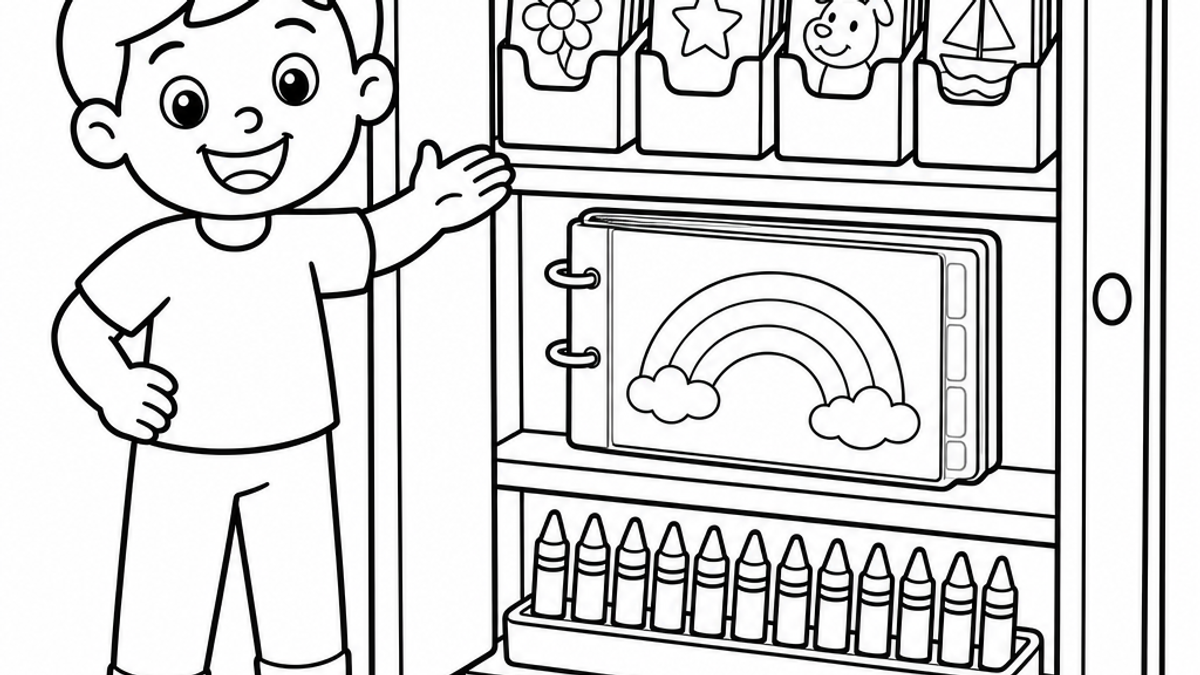
How to Store and Organize Kids' Coloring Pages Without Losing Your Mind (or Your Dining Table)
Somewhere in your house right now there is a stack of coloring pages that has achieved its own gravitational pull. It started as three pages on the counter. It is now forty pages deep, mixed with a permission slip and half a sticker sheet. We've been there. Every parent has been there.
The good news is that organizing kids' coloring pages isn't actually hard. It just needs a system you'll stick with on a Tuesday, not just a system that looks nice on Pinterest.
The Best Way to Store Kids' Coloring Pages (Spoiler: You Don't Keep Them All)
Here's the uncomfortable truth nobody puts in the headline: the best way to store coloring pages starts with not storing most of them. A kindergartner can produce five to ten pages a day between home and school. If you kept every single one, you'd need a second house by second grade.
So the real first step is a quick sort, done weekly or even daily:
- Keep: genuinely a favorite, tied to a memory, or shows a skill leap (first time coloring inside the lines, first time mixing colors on purpose).
- Photograph, then recycle: cute but not special enough to store physically.
- Recycle immediately: the ones scribbled on for ten seconds before your kid moved on to the dog.
This sounds harsh until you realize most four-year-olds don't remember page 32 of "things I colored in March." They remember the one with the dragon riding a skateboard, because they asked for that one specifically and watched it get made. Keep that one. Let the rest go.
Doing this sort regularly (not twice a year in a panic) is honestly the single biggest unlock for reducing paper clutter at home. A once-a-week five-minute sort beats a once-a-year garbage bag of guilt.
Build a Coloring Page Binder System That Actually Works
A binder is the single cheapest, lowest-effort storage solution that still feels like a system. Here's how to make a coloring page binder your kid will actually use:
- Get a basic three-ring binder and a box of clear plastic sleeves. Skip the fancy scrapbook supplies. Sleeves protect pages from creasing and let your kid flip through without tearing anything.
- Sort by theme or by school term, whichever your kid responds to. Some kids love a "my dinosaur phase" section. Others want everything in the order it happened.
- Let your kid pick the keepers. Hand them the finished-page pile and ask which three go in the binder this month. It teaches them to notice what they actually like about a piece, not just finish it and move on. You can even ask why they picked it, the lines, the colors, the composition, since those are the actual building blocks artists use to decide what works in a picture (Getty Museum Education). You don't need the vocabulary lesson. You just need the question.
- Label the spine by year. "Maya, Age 4" beats a drawer full of loose, undated paper you'll have to decode in a decade.
One binder a year is a realistic, finishable project. Twelve overflowing binders is not a system, it's a new clutter category wearing a system costume.
Storage Bins, DIY Ideas, and Other Kids' Art Storage Solutions
Binders are great for the finished, curated stuff. But you'll also want a spot for the "not sure yet" pile, the in-progress projects, and the craft supplies that go with them.
Storage bins for coloring pages work best when they're shallow and flat, not deep totes you have to dig through. A flat under-bed bin or a wide, low drawer keeps pages from folding or crumpling under their own weight.
A few low-cost DIY coloring page storage ideas that actually survive daily use:
- A hanging file box (the kind made for office paperwork) with one folder per kid, one folder per theme.
- A cereal box cut at an angle, covered in contact paper, turned into a magazine-style page holder.
- A clipboard by the craft table for "in progress," so half-colored pages don't get crumpled in a backpack.
If you're also wrangling markers, crayons, and the Magic Brush era of "I need every color right now," pair your page storage with a system for organizing kids' craft supplies, a caddy or drawer divider near wherever coloring actually happens. Pages and supplies living in the same zone means less hunting, which means less meltdown-adjacent chaos at 4:45pm.
If your household runs on specific obsessions (and whose doesn't), it helps to store by subject too. The kid deep in a dinosaur phase this spring might be fully onto unicorns by fall, and a themed folder makes it easy to find "all my dinosaur ones" when they ask, which they will, usually at bedtime, with urgency.
How to Organize Kids' Artwork at Home (Beyond the Coloring Pages)
Coloring pages are just one slice of the paper tidal wave. Finger paintings, construction paper collages, the macaroni thing from preschool, it all needs a home too.
The simplest file system for kids' artwork we've seen actually used long-term: one hanging folder per child, per school year, stored flat in a drawer or file box. Drop things in as they come home. Sort at the end of the year, not the end of every week. You already have a weekly sort for coloring pages specifically; artwork can wait for a seasonal pass.
Worth naming plainly: there's no required amount of fine motor practice a coloring page needs to deliver. Coloring, scribbling, and drawing are simply activities that give kids a chance to practice hand and finger control, the same category as using a fork, buttoning a coat, or playing with playdough (NAEYC). Some kids love coloring and get lots of that practice there. Others get it from puzzles or playdough instead. Either is fine. The point isn't to hoard the evidence, it's to let the activity happen.
Rotating Displays and Memory Boxes: Keeping the Best Without the Clutter
Displaying kids' art without turning your fridge into a collage nightmare just takes rotation. Pick one wall, one corkboard, or one string with clips. New art goes up, old art comes down and either goes in the binder, the memory box, or the recycling.
A memory box for kids' art works the same way as the binder, just for three-dimensional or oversized pieces that won't survive a binder sleeve. One box per kid, one per year, lid labeled. When it's full, it's full. That's the whole rule, and it's the rule that actually prevents the box from becoming eleven boxes.
Digitizing kids' artwork is worth a mention too. A quick photo of every piece before it's recycled gives you a full record without the physical footprint. Some families make a yearly photo book from that folder. It's not required. It's just an option for the pages that are cute but not quite binder-worthy.
Frequently Asked Questions
How do you store kids' coloring pages?
Sort weekly, keep the real favorites in sleeves inside a labeled binder, photograph the "cute but not special" ones, and recycle the rest. A flat bin or hanging folder works for the in-between pile.
What's the best way to organize kids' artwork?
One folder or bin per child per year, sorted at the end of the school year rather than constantly. Add a rotating display spot for current favorites.
How long should you keep kids' coloring pages?
There's no official rule. Many families keep a yearly binder or memory box and let it be the ceiling, once it's full, the oldest or least-loved pages get photographed and recycled to make room.
How do you display and store kids' art without clutter?
Rotate, don't accumulate. Pick one display spot. When new art goes up, old art comes down and moves to storage or the recycling bin, not to a second display spot.
What do you do with all the coloring pages kids make?
Most go in the recycling bin after a quick look, and that's completely normal. The handful that matter go in a binder or box your kid helped choose.
How do I make a coloring page binder?
A basic three-ring binder with clear plastic sleeves, sorted by theme or term, with your kid picking which pages make the cut each month.
Should I keep every coloring page my child makes?
No, and that's okay. Keeping everything just means nothing feels special. A smaller, curated binder actually gets looked at again, which is the whole point of keeping it.
If your storage system keeps collapsing because the coloring pages keep multiplying faster than you can sort them, our daily picture drops one new free page every morning, so at least the stack grows on a predictable schedule instead of ambushing you at random.
The Chunky Crayon Editorial Team
Chunky Crayon editorial
The Chunky Crayon team publishes playful, practical and source-aware ideas for creative family time. Developmental or wellbeing claims are general education, not clinical or educational assessment.